
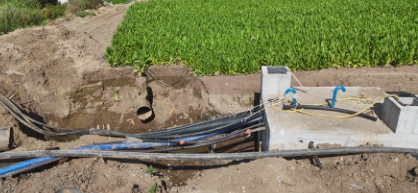
In this practical training activity, students assess the condition of a water conveyance structure damaged after an earthquake by using a drone and reviewing the images and videos captured during the flight. After earthquakes, damage to such systems is not always caused by a single factor; ground movement, changes in ground conditions, and the influence of water may act together. For this reason, an important part of the activity is encouraging students to consider different possible reasons for the observed deformation.
Drone technology enables a safe, fast, and non-contact visual inspection in situations where direct access may be difficult or unsafe. During the activity, students learn how to prepare and operate a drone, plan safe flight paths, capture appropriate visual material, and organize the collected data. While reviewing the images, students examine damage observed in different parts of the structure and discuss whether these observations may be related to ground movement, ground conditions, or water-related effects.
High-resolution images allow students to observe surface changes, visible deformation, and surrounding environmental conditions more clearly. One of the main objectives of the activity is not only to identify visible damage, but also to interpret these observations by considering possible causes. This approach helps students develop cause-and-effect thinking and supports basic analytical skills without requiring advanced technical knowledge or complex analysis tools.
Beyond technical awareness, the training emphasizes safety, careful observation, environmental responsibility, and sustainability. By simulating post-earthquake conditions, the activity introduces students to how drone-based visual assessment can support quick understanding, informed discussion, and responsible decision-making after disasters. Overall, the exercise helps students move beyond simply observing damage and encourages them to think critically about why damage may have occurred, using accessible digital tools in a practical and educational setting.