
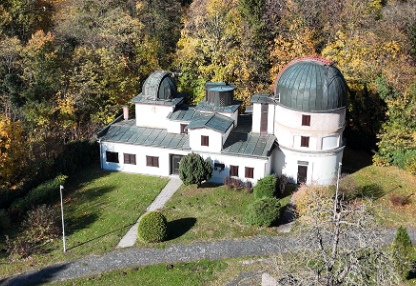
In this task, learners gained practical and theoretical knowledge about the use of drones for scientific and observational purposes, with a particular focus on the environment of the Hurbanovo Astronomical Observatory, a protected heritage building. The aim of the project was for students to learn how to operate drones safely and responsibly in the vicinity of a historic, safeguarded site while collecting visual data about the facility and its surroundings.
Students first became familiar with the fundamentals of drone technology, pre-flight preparation, safety protocols, and the local and heritage-protection regulations governing drone operation near historic buildings. Particular emphasis was placed on flight safety, obstacle avoidance, protection of the building and cultural asset, and proper drone maintenance and pre-flight inspection procedures.
During the practical activity, learners examined different parts of the observatory from the air and captured footage of key features such as the roof structure, domes, the placement of antennas and telescopes, surrounding pathways, and relevant terrain features. During the analysis of the recordings, students identified potentially problematic areas and observed structural and environmental factors that could influence observational activities, while ensuring the integrity of the protected building was not compromised.
Learners conducted the task in teams. They compared drone imagery with on-site conditions, documented observed phenomena, and proposed recommendations for further investigation. The group-based activity strengthened communication, teamwork, critical thinking, and problem-solving competences, as students evaluated what they observed and reflected on their own work and that of their peers.
Throughout the project, students learned how to organise, analyse, and present drone footage, thereby developing digital competences, visual analytical skills, and relevant professional knowledge. By applying drone technology, learners achieved faster, safer, and more accurate data collection while respecting heritage-protection requirements and the observatory’s integrity.
Overall, the task enabled students to connect drone-technology knowledge with practical observation and documentation, develop teamwork and problem-solving skills, and use drones safely and responsibly in a scientific and heritage context, preparing them for further professional and research-oriented drone activities.