
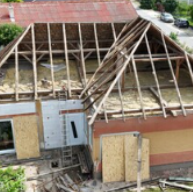
The learning unit “Visual Inspection of a Roof Structure Using Drone Footage” aimed to provide learners with a comprehensive overview of drone applications in the construction sector, with a particular focus on assessing roof conditions and monitoring construction progress. During the project, students learned how to use drone imagery effectively and safely for visual inspection of construction sites, identification of defects and deviations, and preparation of structured documentation.
Students first became familiar with the fundamentals of drone technology, including the key steps of pre-flight preparation and safety checks. They learned how to verify the drone’s battery status, sensors, and camera functionality, and how to ensure that the flight area was safe. Special attention was given to occupational and flight safety, compliance with regulations, and responsible data handling.
During the practical activity, learners captured footage of designated roof areas from different angles and altitudes in order to obtain a complete overview of the structure’s condition. While analysing the recorded material, they identified typical faults that may occur in flat-roof coverings, insulation layers, drainage channels, or roof elements, such as cracks, displaced components, or damaged sections.
Throughout the inspection, students worked in groups. They compared the condition visible in the footage with the intended or planned state and highlighted potentially problematic zones. Teamwork strengthened communication and collaboration skills, critical thinking, and problem-solving, as learners had to evaluate observations and propose appropriate follow-up checks or next steps.
The project also developed both practical and theoretical competences by training learners to organise, document, and present drone-based evidence in a professional manner. Students gained insight into how drone technology enables faster, safer, and more accurate data collection in construction, while reducing risks compared to traditional visual inspection methods.
By the end of the activity, learners were able to independently recognise and document roof-condition issues, analyse aspects of construction progress, and reflect on their own performance and that of their peers. Overall, the task contributed significantly to the development of digital competences, professional knowledge, visual analytical skills, and teamwork in a construction context, preparing students for real workplace situations.