
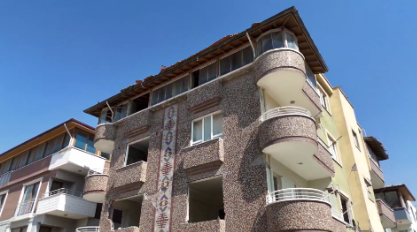
In this practical training activity, students assess the post-earthquake condition and performance of a reinforced concrete residential building by using a drone and analyzing the images and videos captured during the flight. After strong earthquakes, damage to reinforced concrete buildings often occurs on façades, columns, balconies, and roof levels, where close-range inspection may be unsafe due to unstable elements and falling debris. These conditions frequently make traditional ground-based inspection impractical or risky.
Drone technology enables a safe, non-contact visual inspection of the building from multiple angles without the need to approach damaged structural components. During the activity, students learn how to prepare and operate a drone, plan safe flight paths around an urban building, capture appropriate visual material, and organize the collected data. The recorded images and videos are reviewed, classified, and documented, forming the basis of a simple building damage assessment report. This process supports the development of observation, documentation, and professional communication skills.
High-resolution drone imagery allows students to examine different parts of the building in detail, including façades, columns, balconies, and roof areas. One of the main objectives of the activity is to identify visible damage indicators such as cracks, concrete spalling, column damage, non-structural failures, and signs of structural movement, and to record these observations in a clear and systematic way. The exercise also demonstrates that effective post-earthquake building assessment can be carried out using visual evidence alone, without the need for advanced modelling or complex software tools.
Beyond technical learning, the training places strong emphasis on safety, quality, and responsible working practices, while also supporting the development of digital skills, teamwork, responsibility, and independent decision-making. The activity introduces students to the role of drone technology in post-disaster building assessment, highlighting how rapid and safe visual documentation contributes to informed decision-making, damage prioritization, and effective coordination in emergency and recovery processes. By simulating real post-earthquake inspection conditions, the training prepares students for professional practice and enhances their readiness to contribute to post-disaster building assessment and response activities in a practical, accessible, and responsible manner.