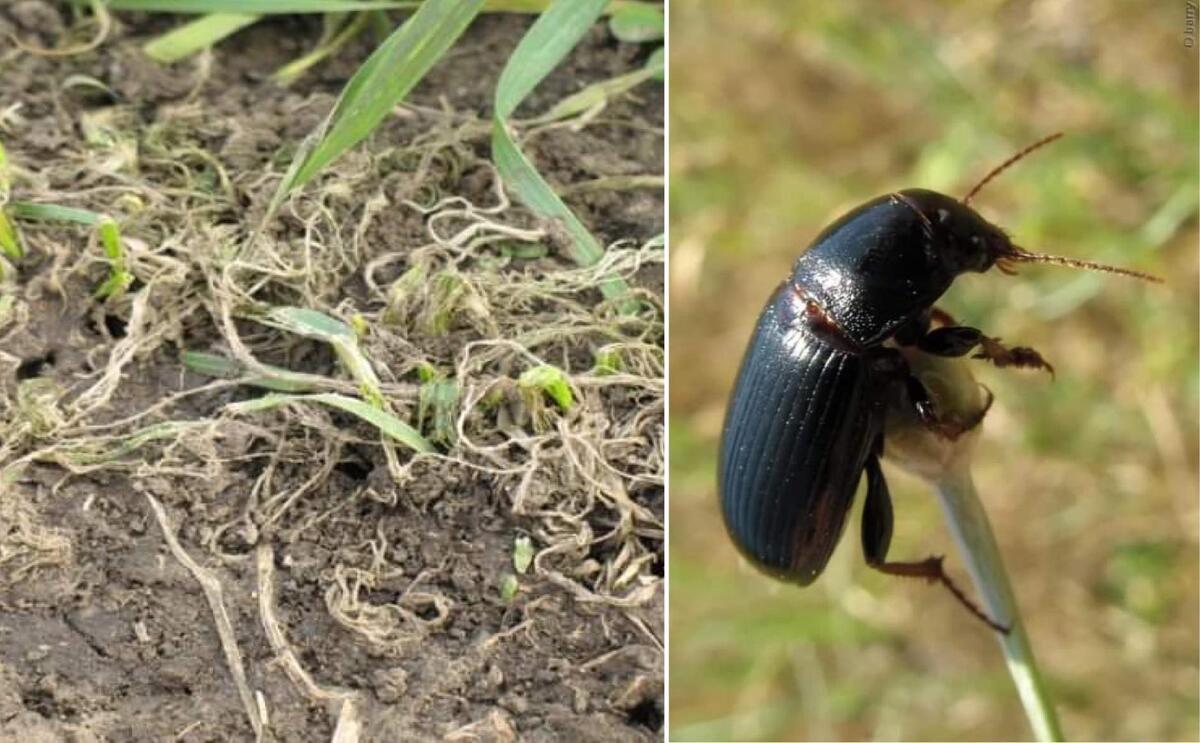
This project focuses on the detection and monitoring of the cereal pest Zabrus tenebroides in wheat fields using a commercial drone (DJI Mini 4 Pro). Students actively engage in identifying early visual symptoms of pest damage, mapping infested zones, and proposing sustainable pest management strategies.
The project integrates theoretical knowledge about the biology and life cycle of Zabrus tenebroides with practical, hands-on analysis of drone images. Learners examine characteristic symptoms, including leaf damage, crop thinning, and irregular field patterns caused by larval feeding.
The project emphasizes early detection, precision agriculture, and environmentally responsible pest management, with students applying their findings to propose localized interventions and Integrated Pest Management (IPM) strategies.
Through practical activities, collaborative group work, and discussions, participants develop key skills relevant to modern agriculture, including digital monitoring, interpretation of visual data, critical decision-making, and application of IPM principles.
The project encourages sustainable wheat production, reduces pesticide use through targeted measures, and aligns with EU agricultural and environmental standards, providing learners with both theoretical understanding and practical experience in UAV-assisted crop protection.