
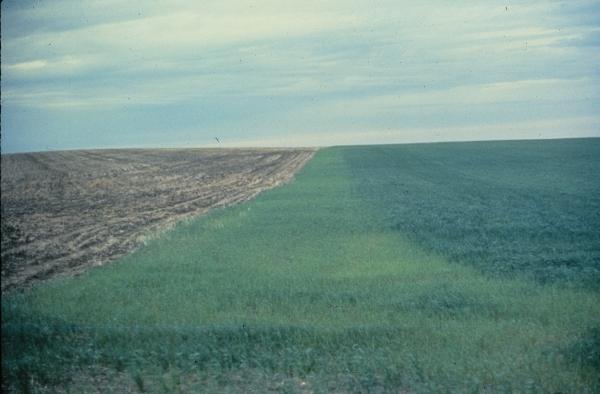
This lesson introduces students to the principles of fertilization management in autumn-sown crops (wheat, barley, rye) based on plant growth stages, supported by visual assessment using a commercial drone equipped with an RGB camera. Through drone-based field observation, students learn how aerial imagery can support decision-making related to the timing, rate, and spatial distribution of fertilization.
The use of drone technology enables the identification of spatial variability in crop growth, early signs of nutrient deficiency, and uneven field development that are often not visible from ground level. By correlating crop growth stages with visual indicators such as plant density, color intensity, and field uniformity, students gain a deeper understanding of crop nutrient requirements during autumn development.
The lesson integrates classical agronomic knowledge with precision agriculture approaches, emphasizing resource efficiency, environmental protection, and sustainable nutrient management. Special attention is given to reducing excessive fertilizer application, preventing nutrient losses, and aligning agricultural practices with EU environmental and sustainability policies.