
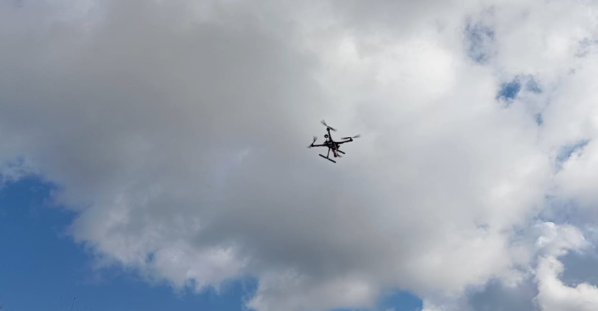
This project invites students to explore the Urban Heat Island effect by observing and comparing temperature and humidity in different urban environments using a custom-built drone equipped with environmental sensors. The activity focuses on contrasting dense built-up areas, open spaces, and green zones such as parks or tree-lined streets.
Urban areas are often warmer than surrounding rural or green spaces due to materials like asphalt and concrete, reduced airflow between buildings, and limited vegetation. These conditions affect comfort, health, and energy use. Through drone-based observation, students gain a wider perspective of how city structure influences local climate.
Students plan simple flight routes, operate the drone under supervision, and collect environmental data. They then review and interpret this information to understand patterns in urban temperature and humidity. The project encourages reflection on sustainable urban design and highlights how technology can support environmental awareness and more people-friendly cities.